Podcast Episode 1: ‘I Literally Dove into that Bomb Shelter Headfirst’
Far Away, Up Close: Global Â鶹¹ú²ú from Â鶹¹ú²ú
Episode 1: ‘I Literally Dove into that Bomb Shelter Headfirst’
Kelly Callahan began her public health career as a Peace Corps volunteer in Côte d’Ivoire, working to prevent the spread of Guinea worm disease. Her goal was to change just one person’s life for the better.
Today, as senior advisor for the Carter Center’s Trachoma Control Program, she leads a team that helps protect millions of people from trachoma, a highly contagious bacterial infection that can cause blindness.
In this episode, Kelly talks about meeting former U.S. President Jimmy Carter for the first time, how her mother inspired her to serve others, and dodging bombs and venomous snakes to deliver water filters in a Sudanese war zone.
Kelly Callahan
They say, “If you hear a bullhorn with a large, loud screeching noise, here’s the bomb shelter.� Lo and behold, around 3 o’clock in the morning, here comes that bullhorn with this large, loud sound. It took up my entire being; it was so big. And so I went running out of my tukul, and right at that point in time, a woman that was running with me, she was like, “Oh God, we didn’t sweep for the snakes.� And I’m like, “What are you even talking about?� And she said, “Well, it’s either death by snake or death by bomb, neither which could happen, but we have to take our choice.� And I was like, “Oh, death by snake.� And I literally dove into that bomb shelter headfirst.
Soyia Ellison, Host
Kelly Callahan grew up in a small town steeped in the spirit of community service. When she joined the Peace Corps, her job was to help a village in Côte d’Ivoire prevent the spread of Guinea worm disease. And her goal was to change just one person’s life for the better. Today, Kelly continues to fight neglected tropical diseases. As the senior advisor for the Carter Center’s Trachoma Control Program, she and her team distribute antibiotics, perform surgeries, teach the importance of face washing, and help create cleaner environments, saving millions from losing their sight. It’s the kind of work that’s always been central to Â鶹¹ú²ú: preventing needless suffering and building hope for some of the world’s poorest people.
This is “Far Away, Up Close: Global Â鶹¹ú²ú from Â鶹¹ú²ú.â€� I’m your host, Soyia Ellison, director of storytelling at the Center. In today’s episode, Kelly talks about mobilizing communities to fight disease, how her mother inspired her to give back, and dodging bombs and poisonous snakes to deliver water filters in a war zone.
Kelly Callahan
My name is Kelly Callahan. Currently, I’m based in Atlanta, Georgia. And I say currently because home is where the heart is, and my heart spent all over the world. Trachoma is a bacterial infection that, with repeated infections over time, causes a scarring of the inner eyelid, and the eyelid turns in upon itself, and a person blinks themself blind through a very painful, long process of eyelashes literally cutting the cornea. It’s so excruciating that we have found hundreds of thousands of people make their own tweezers out of tin cans so that they can pull their own eyelashes out so that they don’t cut their cornea.
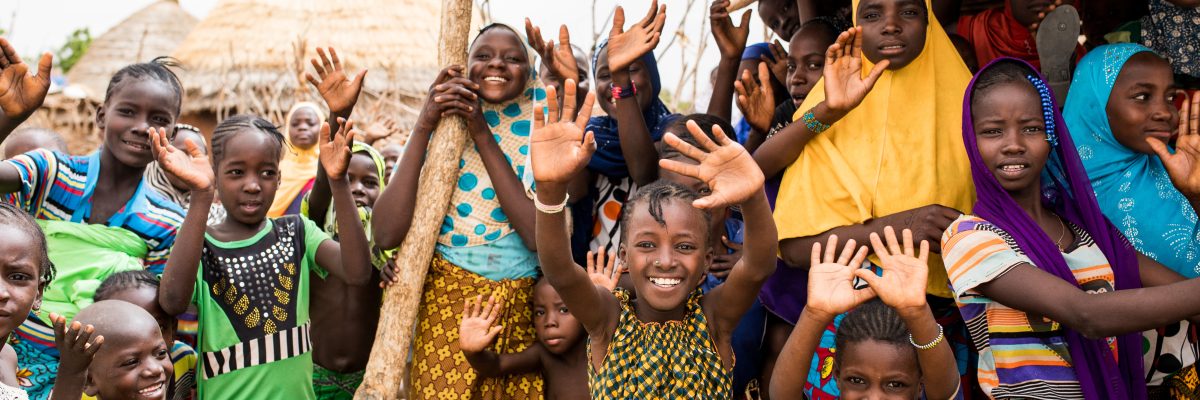
Currently, we work in four countries: Ethiopia, Niger, South Sudan, and Sudan. Women are the backbone to the household in most of the areas in which we serve. Women take care of the children, they take care of the water, they take care of food prep, they take care of the cleanliness. And if a woman suffers because her eyes are in-turning and scraping her cornea, her mental health will suffer, she will go blind, and she cannot care for the family. Oftentimes a man will leave her because she can’t take care of the household anymore. It really does lock women in cycles of horrendous poverty.
Health is a human right. People should not have to suffer from such ancient scourges. When someone has just a single neglected tropical disease, their immune system is challenged. They cannot fight the big three: malaria, tuberculosis, and HIV/AIDS. In 2002, there were 1.5 billion people at risk of this disease. As of March 2026, there’s only 94 million people at risk. It’s actually quite a miracle. This is not a top-down structure where the president of a country is telling people what to do. We rely on an immense cadre of village volunteers and health extension workers. These are all community-based and probably 98% women assisting their brothers and sisters, their neighbors, their aunts, and their uncles to have a better life and to prevent neglected tropical diseases such as trachoma.
I grew up in a place called Kettering, Ohio. My house was three blocks away from my preschool, my grade school, my high school, my swimming pool. My father died when I was 10 months old. So my mother was raising a 5-year-old, a 4-year-old, and a 3-year-old and me. We grew up economically challenged. She relied on the community and the community outreach. And so because she relied on that, she always wanted to give back. So every holiday we would have at least two people from the Salvation Army or the Goodwill that would come and share our family meal with us. We spent every Thanksgiving and Christmas in service at the food bank. We also would attend every community outreach opportunity that my mother had time for, and she would ensure us children volunteered. One of our primary purposes in life was to give to others because our community was giving so much to us.
I think at the age of 8, at one of my mother’s dinner parties, I fell asleep under the table listening to a story about Liberia, and it sounded so amazing. Someone had just done a missionary trip, and it was wintertime, and there was an Irish setter under the table with me, Sandy. And I remember their talk of colorful flowers and colorful women. This very vivid sense of vibrant reds and yellows and greens, and it felt very warm. I’d heard the words Peace Corps sprinkled throughout my life. I always knew I wanted to be a Peace Corps volunteer because I wanted to give 24 months of my life in dedicated service. I didn’t know what I wanted to be when I grew up, maybe a marine biologist or an environmental lawyer. I wasn’t quite sure. But I wanted to test the water. I always thought if I could really make a difference in one person’s life, then my life would be worth it, and I would’ve given back what I had already been given.
The U.S. Peace Corps had signed a tripartite agreement to place Peace Corps volunteers in highly endemic Guinea worm areas and/or villages. Guinea worm disease is a parasitic infection. It’s one of the oldest known diseases in the world. It is a 3-foot-long worm. It looks like a piece of spaghetti. When she wants to come out of the body, she will burn the skin from the inside out with a toxin. That toxin forms a large blister. Once it ulcerates, the Guinea worm pushes through. Once she pushes through, she burns intensely. And the only thing to cause that burning to cool is to put that part of the body in water. And once the Guinea worm senses water, she opens up and starts pushing eggs into the water. Persons that don’t have access to clean water often will drink water that’s standing: Pools, pond water, small lakes, small reservoirs. And they will come and drink that water and unknowingly ingest Guinea worm eggs. And this is the cycle.
I had absolutely no background in health. Also, I studied Spanish in college, and they offered me a French-speaking country, Côte d’Ivoire or the Ivory Coast. And I was placed in a highly endemic area, a very small village called Kouassi-Datèkro in the region of Bondoukou. My French was horrible. So there was a 10-hour bus ride from the capital, and I was on the back of the bus with my counterpart, Bernard, and he was escorting another Peace Corps volunteer that was going to live 70 kilometers from me. So it was the two of us, young women, and an Ivorian woman was sitting next to me. I thought I was telling this woman that I love brushing my hair and I love putting my hair on top of my head, and I don’t cut my hair very often, and I like to keep my hair clean. And this woman just kept looking at me with a big smile on her face.
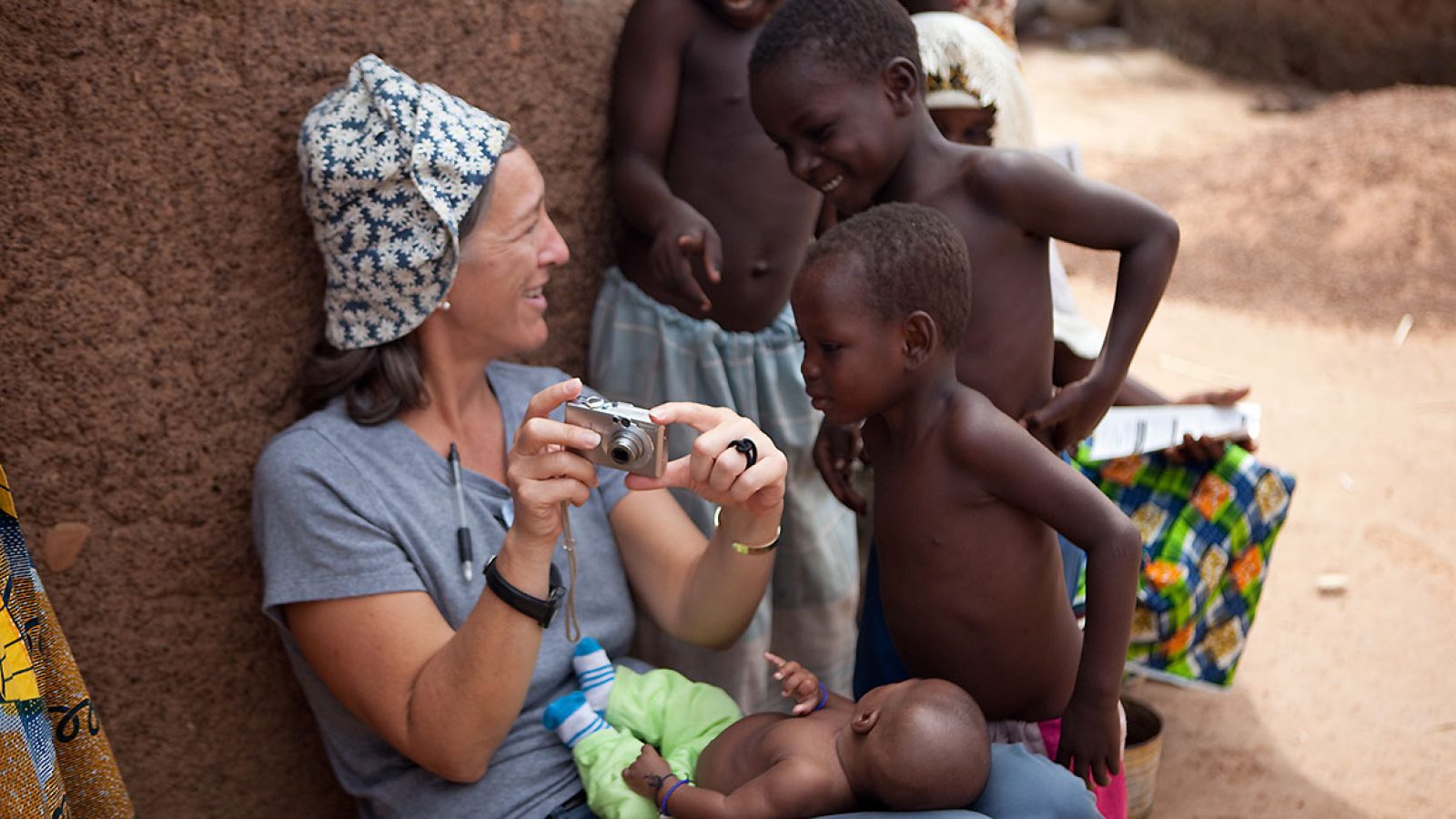
And the Peace Corps volunteer was dying laughing. And I was like, “What? What is wrong with you?â€� She’s like, “You’re talking about your horse.â€� The word “chevauxâ€� and “cheveuxâ€� are so close that I talked about my horse the whole time. “I love putting my horse on my head. I don’t like cutting my horse very often.â€� I couldn’t even pronounce the word “waterâ€� correctly in French when I got there. And I was a water and sanitation, l’eau et l’assainissement, volunteer. So my immediate feeling going into my village was I was out of my depth. I felt literally mute. It was the most challenging thing I could have ever imagined. I would go and sit at the different wells in my village and watch who came. I would say hello, and I started to slowly learn how to communicate in Anyin Bini, which is the local language of my village.
And eventually I would start following a woman back to her house just to see where she took her water. I could ask why and point. Women would go to either one of the boreholes in the village or the wells, and they would pull the water up and put it into a very large metal bowl. If you put your arms out in a big circle in front of you, that’s about the size of their bowl. Once that bowl was filled, they would take part of their headdress or a scarf, and they would roll it up and put that roll on the top of their head. Someone else would help them lift their water bowl up, and they would set it on that scarf that was on their head, and they would carry that bowl back to their domicile. At their domicile, they had their own huge oil barrel that was lined where they would dump their water.
They weren’t filtering their water, and this was problematic, especially when they were getting their water from some of the standing water areas and some of the open wells. The Ministry of Health was providing women with a piece of filter material that was like 8 by 12. So imagine if you put your arms back in that circle, that’s how big an oil barrel is. There’s no way a woman could dump that much water with that much force onto this little 8-by-12 piece of filter cloth. Those flimsy filter cloths became bicycle seat covers, or they were sewn together to become a veil for a wedding. They became diapers for babies. And I thought if we had a big square that was made of wood that could just sit right on top of that oil barrel with the filter that covered the entire square, they could just dump their water just like they are.
About that same time, I was walking through my village, and a car pulled up, and it had a Carter Center logo on the side of it. And there was a man inside. He said, “You are the person I’m looking for. I heard there was a Peace Corps volunteer here that is dedicated to Guinea worm work, and I want to help. What do you need?â€� And I said, “Well, matter of fact, I need $2,000. We want to cut down a tree, and we want to make these frames. We want to get filter material, and we want to get nails. And then we want to distribute these to 500 households.â€� And he said, “You got it. Write up a one-page concept note and do a little budget.â€� And Â鶹¹ú²ú funded my Peace Corps project.
The women loved it. It made it so easy. They could hold their water on their head and grab their filter frame, put that on with one hand, and just dump their water and have filtered, safe water at home. United States Peace Corps asked me to represent Peace Corps at an international Guinea worm program managers meeting. And so I was standing there as people passed by explaining my filter. And lo and behold, along came President Carter. And he came directly straight up to me, and those baby blue eyes looked straight into my soul. And he asked me some questions about my filter frame. It was an extraordinary moment, actually.
I felt the power of honesty, integrity, values, and morals. They were instilled in me, but I didn’t ever feel them as a force. And in that moment, I knew that I wanted to take that force and try to positively impact some other human’s life. If they could feel a force of love in me that I felt in President Carter, that would be a life worth living. And so feeling that made me commit to living a life of service as my career.
There’s a region that we work in called the Amhara region of Ethiopia. This historically has been the worst known area for trachoma in the world. And when we started the program, almost a million people were known to require surgical services to stop them from going blind. At that moment, we’re distributing drugs to 20 million people in this region. We’re carrying out 100,000 surgeries a year. Maybe 10% of the population had access to a latrine when we started. People would come from far away to sell their goods at a village market or a district market, and they had no place to urinate and defecate. So I was there to supervise and to see some of the community latrines that we were building. And I was sitting, sort of on a rock on the side of the road. One of our trucks was by us too, a Carter Center truck.
And from afar, I heard very high-pitched screaming, very much like, “La, la, la, la, la.â€� Very loud, very celebratory. And a woman came running up to me, maybe 60, maybe 65. But she grabbed both my hands, and she kissed my hands and put my hands to her heart and then to her forehead. She had tears streaming down her face. Meanwhile, our country representative, Dr. Zerihun Tadesse, is telling me this woman is now speaking through her tears that we were the ones that brought her surgery and saved her eyesight. This is a team. We’re all doing this together, but she saw Â鶹¹ú²ú, and she saw me. She told me that because of our work, I saved her eyesight and her daughter’s eyesight and possibly her grandchildren’s eyesight because they were taking the pink pills.
She put it all together too. I’m crying. I tend to have snot nose when I get really emotional too. So I have snot bubbles coming out of my nose. We’re both crying and kissing and hugging on each other. It was one of those awestruck moments where I could believe that I actually positively impacted one person’s life, like I did it. And it wasn’t necessarily me; it was this vast, beautiful team that we have. But it was that moment where I felt like, wow, this is what that feels like. It feels good to do good.
Soyia Ellison
Kelly still hasn’t made it to Liberia, the first place she ever dreamed of visiting in Africa. But her career in fighting disease has taken her to 28 countries on the continent so far, and that includes war zones.
Kelly Callahan
My first trip into Southern Sudan, I was still a Peace Corps volunteer. And there was a man by the name of Ross Cox, who was seconded from the Centers for Disease Control and Prevention to Â鶹¹ú²ú. I met him at one of these Guinea worm program managers’ meetings the same year I met President Carter, and he bought me a beer, because Peace Corps volunteers, we have no money, and somebody buys us a beer and we’re best friends. So he says, “Hey, you’re doing great work. Your filter frames are amazing. I love your pipe filter. Would you like to come to Southern Sudan?â€� And I was like, “I don’t know. Isn’t there a war happening there?â€� And he was like, “I mean, there’s some fighting, but it’s not that bad. Just come and check it out.â€� And I was like, “OK.â€�
I flew into a place called Mundri, Southern Sudan. I’m staying with a nongovernmental organization that’s based on the ground. They have a lovely little compound. I have what’s called a tukul. It’s a small round hut made of sticks and mud with a thatched roof. Beautiful little place. And I get in about 5 o’clock in the afternoon; we have dinner. They say, “Here’s a place where you can take a shower. If you hear a bullhorn with a large, loud screeching noise, here’s the bomb shelter.� And I’m like, “Should I be concerned?� And they’re like, “You should always be concerned.�
Lo and behold, around 3 o’clock in the morning, here comes that bullhorn with this large, loud sound. And so I went running out of my tukul, and a woman that was running with me, she stopped, and she was like, “Oh God, we didn’t sweep for the snakes.� And I’m like, “What are you even talking about?� Meanwhile, I could hear the engine of an Antonov flying overhead. It is an old Russian aircraft that they would roll bombs out of the back of. So the Antonov is getting closer. A bomb could be rolled out the back of it. It could drop. We’re next to a hospital, and they were bombing hospitals at the time. What should I do? And I looked at her, and she looked at me, and she said, “Well, it’s either death by snake or death by bomb.� And I was like, “Oh, death by snake.� And I literally dove into that bomb shelter headfirst.
It’s pure pitch black. We’re all completely silent because maybe we could hear the slither of the snake. The Antonov, we finally hear the engine trolling quietly away, and we all come out, and there was no snake. I was exhausted and slept like a baby. So I knew I was going to be OK in Southern Sudan. Didn’t even dream about snakes or bombs dropping. And they did drop bombs about 20 kilometers from our location that evening.
Our vehicles would get stopped by gunpoint, vehicles filled with filter cloths and pipe filters, and we had to fly everywhere. And there were times that I was shocked that we were even able to do the work that we were able to do.
We wanted to blanket the entire country with pipe filters. So we made 9 million pipe filters using refugees from Southern Sudan and Sudanese refugees in Kenya because the war was raging and Guinea worm was raging. And one of my friends that worked for the International Committee of the Red Cross had just bought the former president of Tanzania’s plane. He’s like, “Hey, let’s load it up with pipe filters, but you come with me.� And I’m like, “OK, that sounds great. Love to.� We’re in the air. All of a sudden there’s a massive sandstorm. We’re about 10,000 feet in the air, and all the dials on the dash stop working. And I’ve got headphones on. He’s like, “Hey, Kelly, can you take your knee and just start hitting the bottom of the dashboard? Let’s see if we can get those dials to start working again.� And I’m like, “Oh yeah, sure. No problem.� And I start doing it. And all of a sudden everything clicked, and the dials started working again. The sandstorm went away, and he’s like, “OK, we’re good. We can go land these pipe filters.� It was crazy.
The Centers for Disease Control and Prevention sent two consultants over to assess the entire project, and they named it one of the most efficacious public health projects to be implemented at that point in time. And because of that, President Carter thanked me for my work, and he wrote, “Love, Jimmy.â€� It’s framed and on my wall. I was like, “Oh my God, this was all so worth it.” I’ll never forget, we were going to give him a briefing on the Guinea Worm Eradication Program and what we were doing. It was just me and President Carter for almost an hour strategizing about the Guinea Worm Eradication Program with this huge map on the table. He just kept firing questions and asking me, “What about this? And why aren’t we doing that? And would you do that? And could you consider that?â€� His questions and clarifications and ideations came from this place of improving people’s lives in such an intelligent way.
I felt like I learned 10 years’ worth in an hour’s worth of time. It was one of those pivotal moments that sort of changes your trajectory. And I was like, “Hell yeah, I’m going to keep doing this for the rest of my life, for as long as I can, because I want to work myself out of a job.�
Soyia Ellison
Kelly may well work herself out of a job someday. Working alongside a host of international partners and government ministries, Â鶹¹ú²ú has supported more than 960,000 sight-saving surgeries and distributed 234 million doses of antibiotics to combat trachoma. The number of people at risk of the disease is dropping every year.
Thanks for listening to “Far Away, Up Close: Global Â鶹¹ú²ú from Â鶹¹ú²ú.â€�
I’m your host, Soyia Ellison.
The series is a presentation of Â鶹¹ú²ú, in partnership with Audiation.
Sandy Smallens of Audiation and I are the executive producers.
Our story editors are Susie Armitage and Andre Gallant.
Our series producer and audio/video editor is Colleen Cox.
Sound design, mix engineering and theme and original music composition by Paul Vitolins and Marcelo de Oliveira for Audiography.
Madeleine Evans is our production coordinator.
Audience development by Jacob Kramer-Duffield.
Podcast cover by Matt Zivcovic for Mateeya.
We’d like to thank all of our story subjects, who so generously shared their time and lives with us.
Video Trailer
Coming Soon
Our next episode arrives in two weeks. Join us to hear Rana Shabb in Episode 2: ‘Even Today, I Hate Fireworks.’
Related Tags
Need more inspiration and hope in your life?
Subscribe to “Far Away, Up Close” wherever you listen so you never miss an episode.
Global Impact Starts with You
Your support sustains the Carter Center's mission of waging peace, fighting disease, and building hope around the world.